
The event industry is undergoing a massive transformation, thanks to rapid advancements in event technology. From AI-driven automation to immersive AR experiences, cutting-edge innovations are redefining how events are planned, executed, and experienced.
In 2025, the demand for seamless, engaging, and data-driven events is higher than ever. Attendees expect personalized experiences, hybrid accessibility, and real-time interactions, pushing event professionals to embrace the latest tech trends. Those who fail to adapt risk falling behind—or worse, making critical event planning mistakes that affect attendee satisfaction and ROI.
So, what are the top event technology trends shaping the future? Let’s dive into the game-changing innovations transforming the industry.
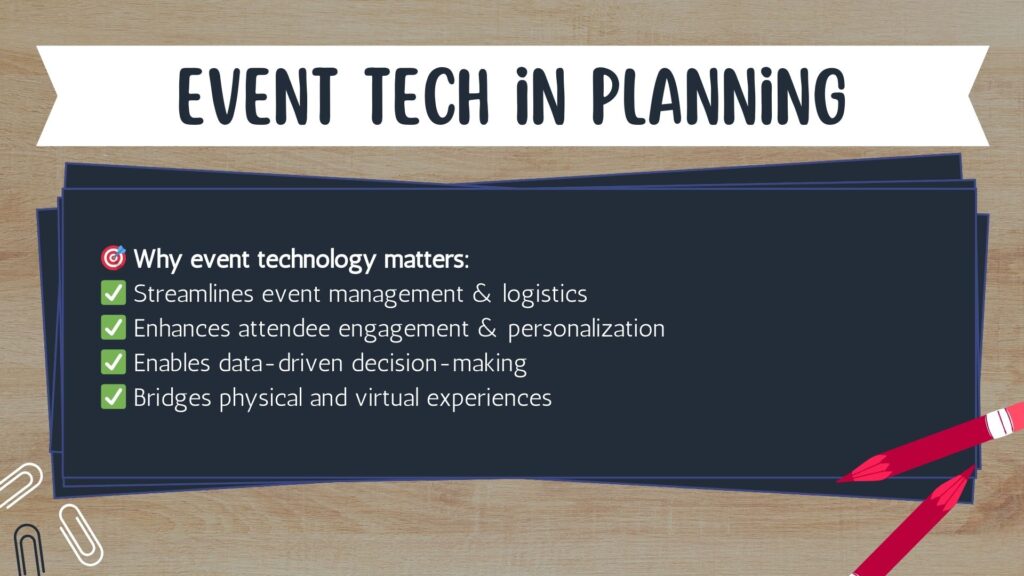
The Role of Event Technology in Modern Event Planning
In today’s fast-paced event industry, event technology is no longer a luxury—it’s a necessity. From streamlining logistics to enhancing attendee engagement, technology plays a crucial role in delivering seamless, data-driven, and immersive event experiences. Whether it’s AI-powered automation, hybrid event platforms, or IoT-enabled smart venues, embracing the latest tech ensures greater efficiency, better audience interaction, and higher ROI. As we explore the key trends shaping 2025, it’s clear that innovation is the driving force behind the future of events.
1. AI-Powered Event Management
Artificial Intelligence (AI) is at the forefront of event technology, revolutionizing the way events are planned, managed, and experienced. In 2025, AI is no longer just a helpful tool—it’s a necessity for delivering seamless and highly personalized events.
AI-Driven Personalization
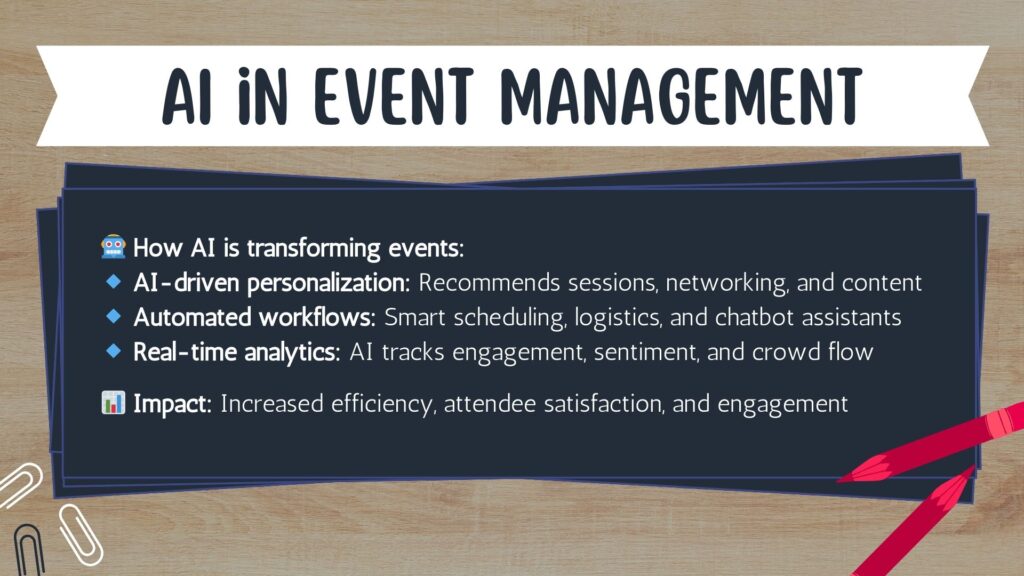
Attendees expect experiences tailored to their preferences, and AI makes this possible. Smart algorithms analyze attendee behavior, past interactions, and interests to offer:
- Personalized agendas: AI recommends sessions, speakers, and networking opportunities based on individual preferences.
- Smart matchmaking: AI-powered networking tools connect attendees with like-minded professionals for more meaningful interactions.
- Chatbots & virtual assistants: AI-driven chatbots provide instant event information, answer FAQs, and guide attendees in real time.
Automated Workflows & Event Planning
AI streamlines event planning by automating complex tasks, allowing event organizers to focus on strategy and creativity. Key benefits include:
- Automated scheduling: AI tools optimize event schedules, avoiding conflicts and maximizing engagement.
- Logistics optimization: AI analyzes venue layouts, traffic flow, and seating arrangements for efficient space utilization.
- Speaker & content recommendations: AI suggests relevant speakers and content topics based on audience preferences.
Real-Time Analytics & Decision-Making
AI-driven analytics tools help event planners make data-backed decisions instantly. Features include:
- Live attendee tracking: AI monitors session attendance, engagement levels, and movement patterns to optimize event flow.
- Sentiment analysis: AI scans social media and feedback forms to gauge attendee satisfaction in real time.
- Post-event insights: AI compiles reports on attendee behavior, engagement, and ROI, helping planners improve future events.
By integrating AI-powered solutions, event organizers can enhance efficiency, engagement, and overall event success. The next big innovation? Augmented Reality (AR) & Virtual Reality (VR)—let’s explore how these immersive technologies are reshaping event experiences.
2. Augmented Reality (AR) & Virtual Reality (VR) Experiences
The rise of event technology has brought immersive experiences to the forefront, with Augmented Reality (AR) and Virtual Reality (VR) redefining how attendees interact with events. In 2025, these technologies are no longer futuristic concepts—they are essential tools for enhancing engagement and creating memorable experiences.
Immersive Event Environments
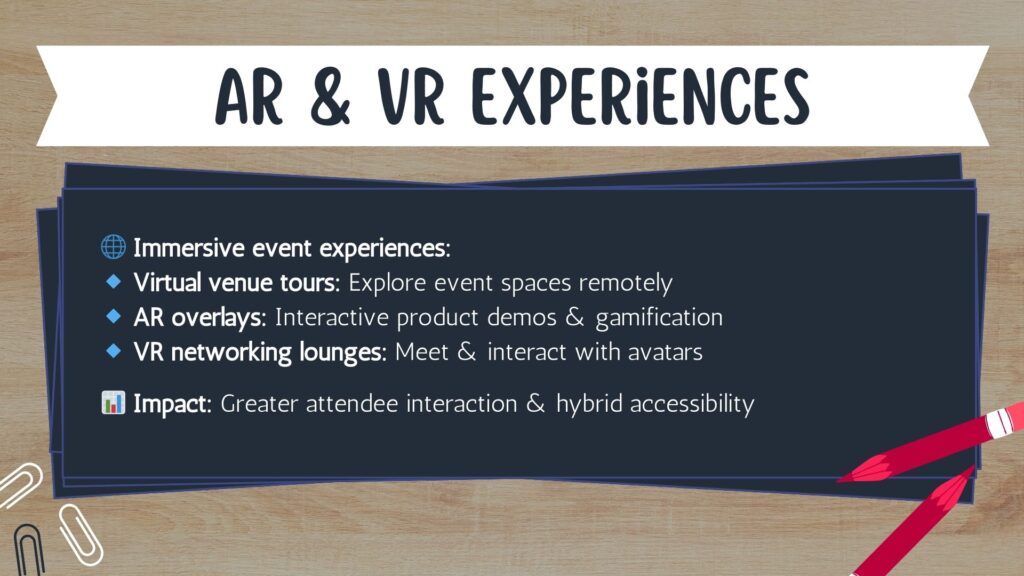
AR and VR bridge the gap between physical and digital experiences, offering attendees a new level of interaction. Some key applications include:
- Virtual venue tours: Before attending an event, guests can explore the venue in 3D, visualizing layouts, seating, and exhibitor booths.
- Fully immersive VR events: Attendees can participate in trade shows, conferences, and networking sessions via VR headsets, eliminating geographical barriers.
- AR-enhanced presentations: Speakers can use AR to display interactive graphics, animations, and holograms, making sessions more engaging.
Interactive AR Overlays
AR overlays bring static event elements to life by integrating digital content into real-world environments. Event planners are using AR for:
- Product demonstrations: Attendees can scan QR codes or use AR apps to see 3D models of products in action.
- Wayfinding & navigation: AR-powered maps guide attendees through large venues, helping them find booths, restrooms, or breakout sessions.
- Gamification & engagement: Scavenger hunts, trivia, and AR-powered challenges encourage attendee participation and social sharing.
Enhanced Hybrid & Virtual Experiences
For hybrid and fully virtual events, AR and VR ensure remote attendees feel just as engaged as those attending in person. Key innovations include:
- VR networking lounges: Virtual spaces where attendees can interact, exchange business cards, and join discussions as avatars.
- Holographic speakers: Industry leaders can appear as life-sized holograms at multiple events simultaneously.
- Live AR translations: AR glasses provide real-time language translations, making global events more accessible.
As AR and VR technology continue to evolve, event planners have more tools than ever to create immersive, engaging, and interactive event experiences.
3. Hybrid & Virtual Event Innovations
Hybrid and virtual events have become a permanent fixture in the industry, and event technology is making them more seamless, engaging, and inclusive than ever. In 2025, event planners are leveraging advanced tools to bridge the gap between physical and virtual attendees, ensuring an immersive experience for all.
Advanced Hybrid Event Platforms
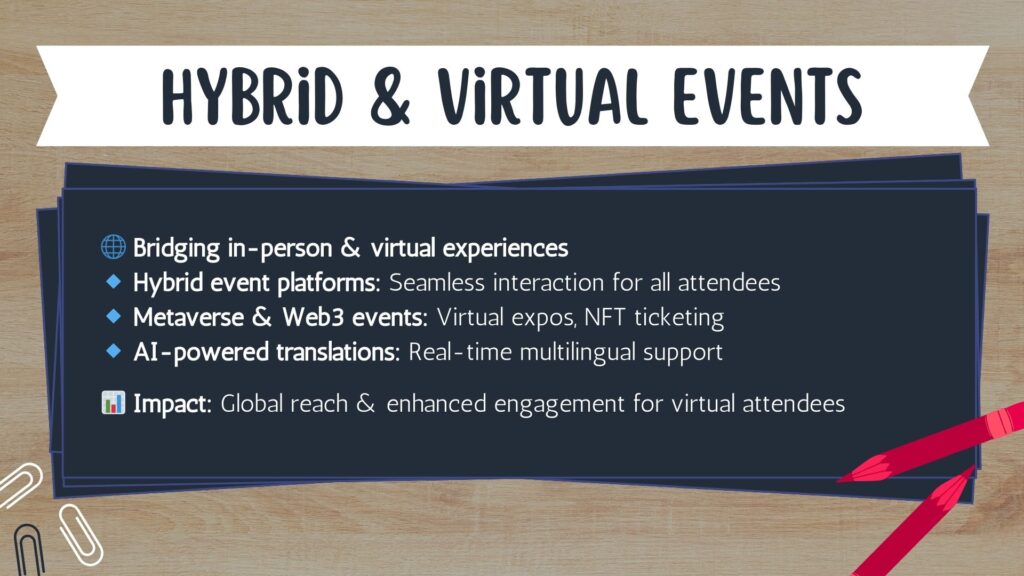
Modern hybrid event platforms go beyond simple live streaming. They offer:
- Interactive live polling & Q&A: Virtual and in-person attendees can engage with speakers in real time.
- AI-driven matchmaking: Intelligent networking tools connect attendees with shared interests, whether they are attending in person or online.
- Multi-view live streaming: Attendees can switch between different camera angles, speaker panels, and breakout sessions for a personalized experience.
Metaverse & Web3 Events
The rise of the metaverse is reshaping the way events are hosted, offering decentralized and immersive digital spaces. Key trends include:
- Virtual expo halls: Attendees can explore exhibitor booths, interact with 3D product demos, and network via avatars.
- Blockchain ticketing: Secure, fraud-proof NFT-based tickets ensure verified event access.
- Gamified engagement: Digital rewards and tokenized incentives encourage participation in virtual events.
AI-Powered Live Translation & Accessibility Tools
Inclusivity is a top priority in 2025, and event planners are using AI to break language and accessibility barriers:
- Real-time subtitles & translations: AI-driven tools provide instant translations for global audiences.
- Sign language AI avatars: Virtual sign language interpreters help make events accessible to the hearing impaired.
- Voice-to-text AI: Live captions ensure that all attendees, regardless of hearing ability, can follow presentations.
By integrating cutting-edge event technology, hybrid and virtual events are no longer just an alternative but a preferred choice for many attendees and organizers.
4. Smart Venues & IoT Integration
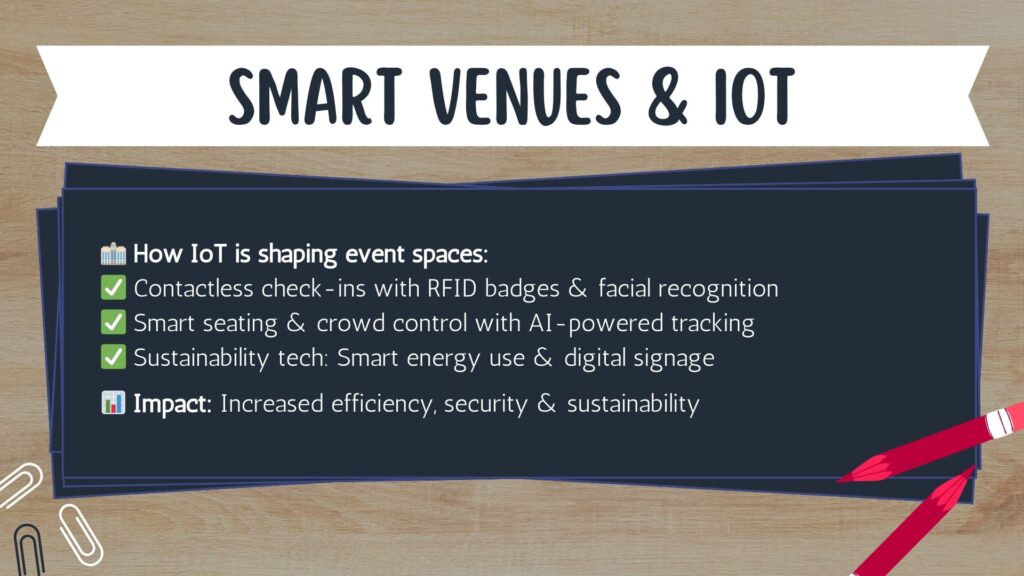
As event organizers strive for efficiency, security, and sustainability, smart venues powered by the Internet of Things (IoT) are becoming the gold standard. In 2025, connected devices and real-time data collection are optimizing event operations like never before.
Contactless Check-Ins & RFID Badges
Gone are the days of long registration lines and paper tickets. IoT-driven solutions are making check-ins faster and more secure:
- Facial recognition & biometric entry: Attendees can gain access using facial scans, reducing wait times.
- RFID & NFC badges: These smart badges allow touchless check-ins, access control, and even cashless payments at events.
- Mobile event passes: Digital passes stored in attendees’ smartphones eliminate the need for printed tickets.
Smart Seating & Crowd Control
Managing attendee flow and optimizing venue space is easier with IoT-powered solutions:
- AI-powered seating arrangements: Smart algorithms analyze attendee data to suggest the best seating for networking or engagement.
- Live occupancy tracking: IoT sensors monitor room capacity, helping event planners adjust seating and avoid overcrowding.
- Automated crowd flow management: Real-time heatmaps help organizers direct attendees to less crowded areas.
Sustainability & Green Event Tech
Eco-conscious event planning is a priority in 2025, and IoT is helping reduce environmental impact:
- Smart energy management: Automated lighting and climate control optimize energy use based on attendee density.
- Digital signage & paperless events: IoT-powered displays replace printed schedules and event brochures.
- Waste tracking sensors: Smart bins monitor waste levels, promoting efficient recycling and sustainability efforts.
By embracing IoT and smart venue technologies, event planners can create efficient, secure, and eco-friendly events that enhance attendee experiences while reducing operational challenges.
5. Data-Driven Engagement & Marketing
In 2025, event technology is more than just logistics—it’s about creating highly engaging and personalized experiences. Data analytics and AI-powered marketing tools are helping event planners understand their audiences like never before, ensuring every interaction is meaningful and impactful.
Predictive Analytics for Smarter Event Planning
Event organizers are using AI and big data to anticipate attendee behavior and make data-backed decisions. Key benefits include:
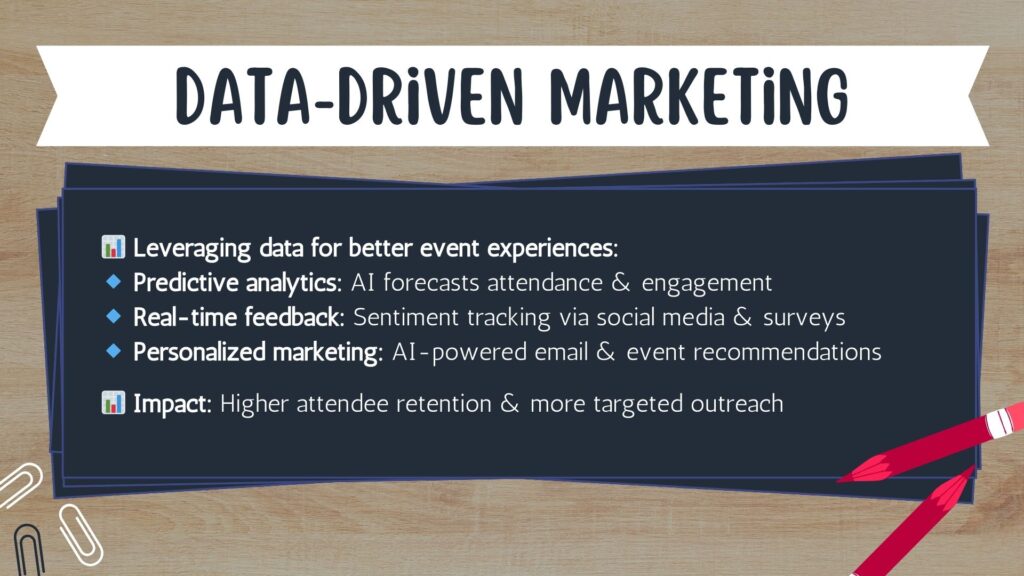
- Audience insights: AI analyzes registration data, social media activity, and past event behavior to predict attendance rates and interests.
- Optimized scheduling: Data-driven tools recommend the best time slots for sessions to maximize engagement.
- Demand forecasting: AI helps planners anticipate ticket sales, catering needs, and resource allocation.
Real-Time Feedback & Sentiment Analysis
Gone are the days of waiting until post-event surveys to gauge success. Now, AI-driven tools provide instant feedback:
- Live sentiment tracking: AI scans social media mentions and chat discussions to analyze attendee reactions in real time.
- Instant polls & feedback forms: Mobile event apps allow attendees to rate sessions and provide feedback instantly.
- Engagement heatmaps: Smart analytics track which booths, sessions, or speakers are drawing the most interest.
Hyper-Personalized Event Marketing
Personalization is the key to driving attendance and engagement. AI-powered marketing solutions enable:
- Customized email campaigns: AI segments audiences and tailors event invitations based on interests and past interactions.
- Smart event recommendations: AI suggests relevant sessions, speakers, and networking opportunities for each attendee.
- Retargeting & post-event marketing: Data helps planners follow up with attendees, share personalized content, and drive future event registrations.
By leveraging AI and data-driven strategies, event planners can boost engagement, increase ROI, and create highly customized event experiences that keep attendees coming back.
6. The Future of Event Technology: What’s Next?
As we look beyond 2025, event technology continues to evolve at a rapid pace, bringing even more innovation to the industry. From ultra-fast connectivity to AI-powered event assistants, the future promises smarter, more immersive, and highly efficient event experiences.
5G-Powered Events & Real-Time Interactions
The expansion of 5G networks is revolutionizing live events by offering:
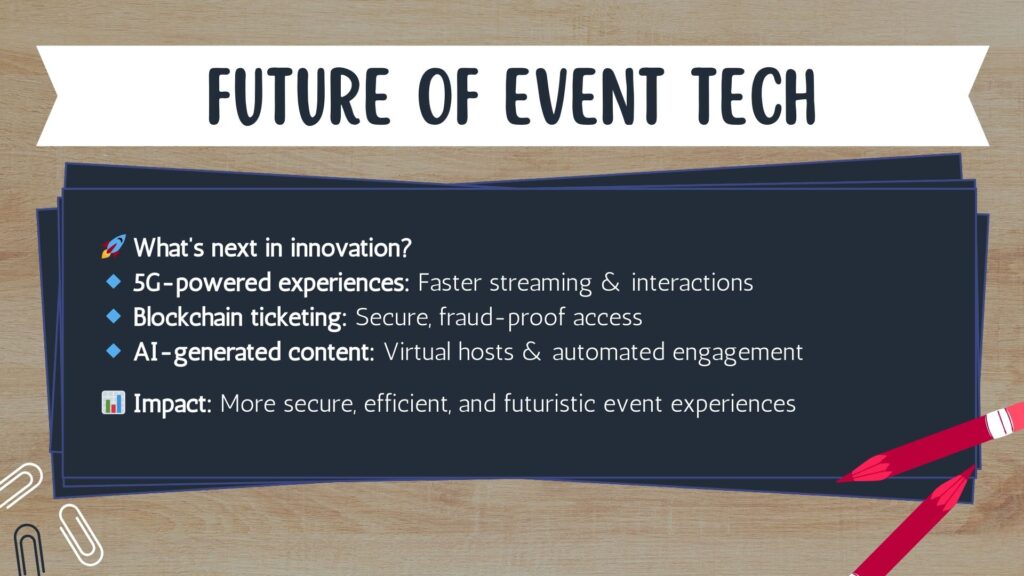
- Seamless live streaming: Ultra-low latency ensures high-quality video streaming without buffering.
- Real-time audience engagement: Instant polls, live Q&A, and interactive features work flawlessly with minimal delay.
- Enhanced AR & VR experiences: High-speed data transfers make immersive tech more accessible and responsive.
Blockchain for Ticketing & Security
Blockchain technology is transforming event management with:
- Fraud-proof ticketing: NFT and blockchain-based tickets prevent scalping and counterfeiting.
- Smart contracts: Automated transactions ensure secure and transparent vendor payments.
- Decentralized data storage: Improved data privacy and security for attendee information.
AI-Generated Content & Virtual Hosts
AI is not only optimizing event planning but also enhancing content delivery with:
- AI-powered speakers & hosts: Virtual presenters can deliver keynotes, moderate panels, and even interact with attendees.
- Automated content creation: AI tools generate personalized event summaries, highlight reels, and post-event reports.
- ChatGPT-like assistants: Smart chatbots provide real-time answers, schedule updates, and personalized recommendations.
With these advancements, event planners must stay ahead of the curve, embracing emerging event technology to remain competitive and create unforgettable experiences.
From AI-driven personalization to blockchain security, the event industry is undergoing a technological revolution in 2025. To stay ahead, event professionals must continuously explore and integrate these innovations into their strategies.
What’s your take on the future of event technology? Let’s discuss in the comments!
Conclusion
The event industry in 2025 is more dynamic than ever, thanks to groundbreaking advancements in event technology. From AI-powered personalization and immersive AR/VR experiences to smart venues and blockchain security, these innovations are reshaping how events are planned, executed, and experienced.
Event planners who embrace these technologies can create seamless, engaging, and data-driven experiences that meet the ever-growing expectations of attendees. However, those who resist change risk making costly event planning mistakes that could impact engagement, security, and overall success.
Key Takeaways:
✅ AI & Automation streamline event management and enhance personalization.
✅ AR & VR make events more immersive and interactive.
✅ Hybrid & Virtual Innovations bridge the gap between in-person and remote attendees.
✅ Smart Venues & IoT improve efficiency, security, and sustainability.
✅ Data-Driven Marketing helps organizers understand and engage their audience better.
✅ Future Trends like 5G, blockchain, and AI-generated content will further transform the industry.
What’s Next?
To stay ahead in this evolving landscape, event professionals must:
- Keep up with emerging event technologies.
- Experiment with new tools to enhance attendee experiences.
- Prioritize sustainability, accessibility, and security in event planning.
What are your thoughts on the future of event technology? Drop a comment below!
Leave a Reply